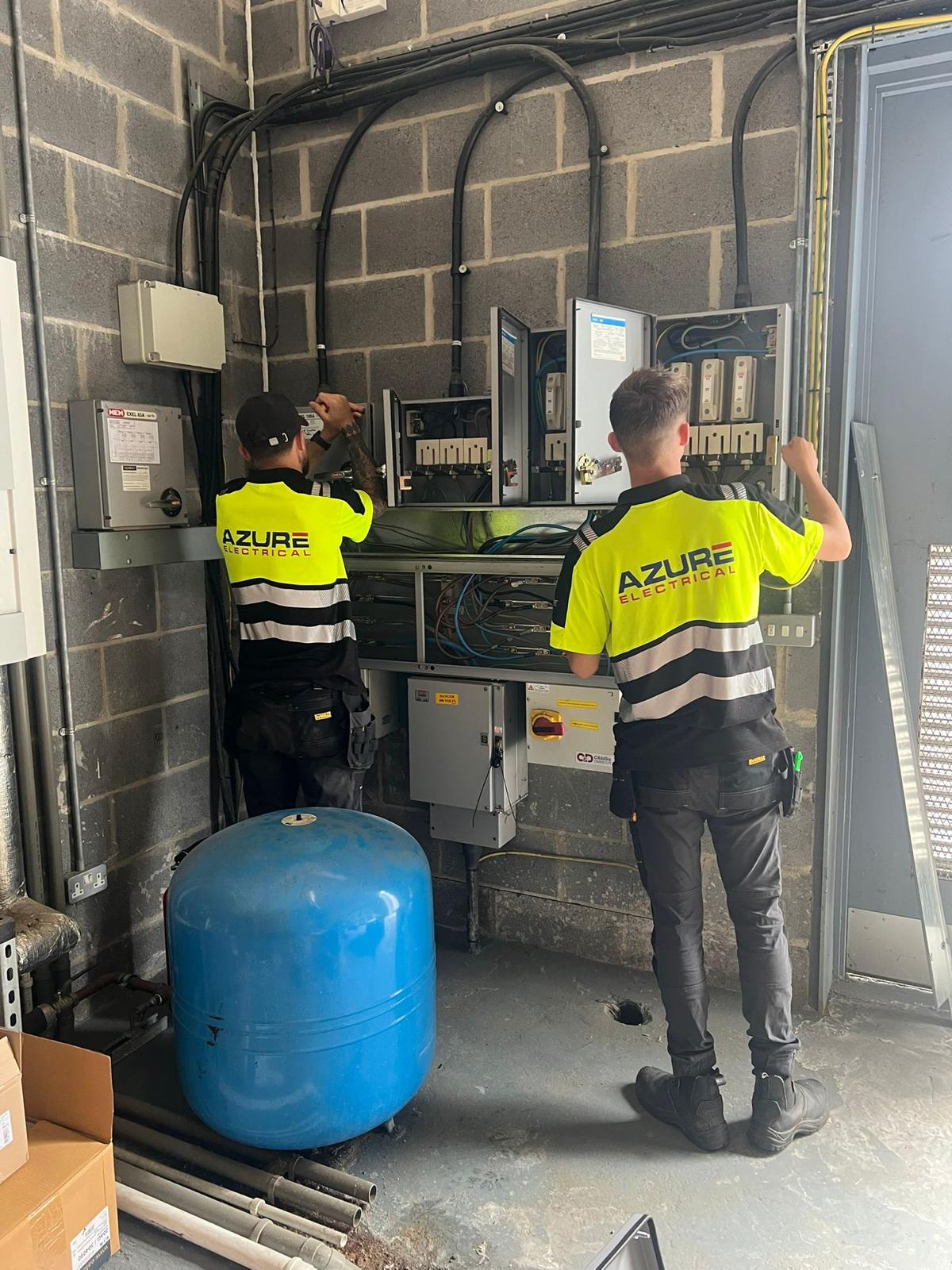





Electrical work in a London school is rarely just a technical installation. It has to fit around pupils, staff, safeguarding, exams, community use, shutdown limits, deliveries and other contractors. A clear delivery plan is therefore as important as the specification itself.
This guide is for school business managers, estates teams, multi-academy trusts, consultants and facilities managers planning electrical installation, remedial or upgrade work. It outlines the information that helps a competent contractor assess the site, define the scope and propose a safe programme. It does not replace a site-specific risk assessment, design, construction phase plan or professional advice.
1. Start with a survey, not a fixed assumption
A useful first survey establishes what the school needs, what is already installed and what could disrupt delivery. Existing drawings and reports are valuable, but they may not reflect later alterations, changes of use or temporary work.
Before the visit, assemble the information that is reasonably available:
the latest EICR, electrical certificates and outstanding remedial schedule;
distribution-board schedules, drawings and information about previous alterations;
the asbestos register and relevant pre-construction information;
the areas, equipment and circuits believed to be affected;
school opening, exam, event and community-use dates;
access, parking, delivery, storage, welfare and induction arrangements;
known shutdown restrictions and business-continuity requirements;
other contractors, consultants or building projects that could affect the programme.
The Department for Education’s school estate project guidance recommends early surveys, realistic planning, defined responsibilities and careful management of disruption.
2. Define the school’s operating constraints
The programme should be built around the way the site actually operates. ‘Complete during the holidays’ is not enough detail: contractors may need surveys, design decisions, material lead time, access equipment, isolation windows, testing and handover before the school can use the affected areas.
Record the constraints that cannot move and the ones that can be negotiated. These may include:
occupied classrooms, SEN spaces, kitchens, halls and offices;
examinations, performances, lettings and wraparound provision;
fire-alarm, emergency-lighting, access-control, IT and security interfaces;
roof access, plant rooms, risers, ceiling voids and restricted areas;
noise, dust, temporary barriers and escape-route requirements;
delivery times, loading limits and secure material storage;
daily sign-in, supervision and safeguarding procedures.
One named school representative should be able to confirm access, communicate changes and approve agreed decisions. Where responsibilities sit across a trust, landlord, local authority or managing agent, record who controls each approval before work begins.
3. Plan shutdowns and safe isolation
Electrical work must be planned so that isolation is controlled and the finished installation is safe. HSE guidance states that equipment and installations should be prepared for work, including secure isolation and the release of relevant energy sources. The competent people carrying out the work should define and control the isolation procedure.
See HSE guidance on work on electrical equipment, machinery or installations.
For each planned shutdown, agree:
the circuits, equipment and spaces affected;
who is authorised to approve the shutdown;
the isolation, lock-off, verification and re-energisation arrangements;
what must remain operational and whether any temporary supply is genuinely required;
how fire, security, communications, refrigeration, pumps or specialist equipment will be protected;
the testing, inspection and sign-off required before the area returns to use;
the communication route if the scope or shutdown duration changes.
Important: Out-of-hours access does not remove the need for safe isolation, competent supervision, realistic testing time and a controlled return to service.
4. Choose the right delivery model
Different parts of a project may need different working arrangements. The safest and least disruptive option should be agreed from the real scope, rather than assuming every task must happen at night or during a full closure.
In-hours, controlled work
Suitable for surveys, documentation, accessible non-intrusive work or activity that can be fully separated from pupils and staff. The site still needs clear routes, supervision and communication.
Phased delivery
Useful when one floor, block, distribution board or group of rooms can be completed and tested before the next phase begins. Phasing can protect continuity, but it requires clear boundaries, temporary conditions and change control.
Evening, weekend or holiday work
Appropriate where isolations, intrusive work, access equipment or noise would conflict with normal use. The programme must still allow for access, supervision, testing, cleaning, snagging and handover before the building reopens.
Reactive response
Faults and loss of service need a different process from planned project work. Azure Electrical provides 24/7 reactive maintenance, but the appropriate response depends on the fault, site risks, access and available information. No arrival-time guarantee is implied.
5. Build safeguarding and occupied-site controls into the plan
School safeguarding rules should be provided before attendance and incorporated into the site plan. Requirements vary, so the contractor should not assume that one school’s arrangements apply to another.
confirm sign-in, identification, escort and restricted-area rules;
separate work routes from pupils and public circulation where required;
secure tools, materials, access equipment and incomplete work at every break;
control dust, noise, temporary lighting, waste and fire-door arrangements;
agree how changes, incidents and unexpected discoveries will be reported;
record who checks the area before it is returned to normal use.
If work continues while the school is occupied, the programme should identify the specific areas and times that remain available—not simply state that the site is open.
6. Confirm CDM roles and pre-construction information
Where the work falls within the Construction (Design and Management) Regulations 2015, commercial clients have duties to make suitable management arrangements, appoint organisations with the necessary capability, allow sufficient time and resources, provide relevant pre-construction information and ensure the required construction phase planning is completed.
Use the HSE’s commercial-client guidance to confirm the dutyholder arrangements that apply to the project.
Electrical work may also interact with building regulations, asbestos management, fire safety, access equipment, structural work or other trades. Identify these interfaces early and confirm who owns each design or approval decision.
7. Turn the scope into a phased programme
A practical programme should show more than start and finish dates. It should connect the survey, decisions, procurement, access and handover requirements.
Survey and evidence review — inspect the affected areas and validate available records.
Scope and design decisions — agree inclusions, exclusions, interfaces and approval responsibilities.
Procurement and enabling work — confirm equipment, lead times, access equipment and preparatory tasks.
Delivery phases — define work areas, isolation windows, boundaries and daily controls.
Inspection and testing — allow enough time for verification and any necessary correction.
Handover — provide the agreed records, labels, certificates, operating information and outstanding-action list.
Any scope change that affects safety, cost, access or the reopening date should be recorded and approved through the agreed contact rather than handled informally on site.
8. Define the handover before work starts
The client and contractor should agree the expected handover evidence at quotation or pre-start stage. Depending on the work, this may include:
electrical installation or minor-works certification;
inspection and test results;
updated circuit schedules and labels;
as-fitted drawings or marked-up information where required;
manufacturer information and operating instructions;
photographic evidence for concealed or phased work where appropriate;
a clear snagging and outstanding-action record;
confirmation of the areas and systems returned to service.
For existing-condition reports and remedial planning, see Azure Electrical’s Statutory Compliance service.
Information to send before requesting a quotation
A complete first enquiry helps the contractor decide whether the next step should be a document review, survey, budget estimate, formal quotation or reactive attendance. Include:
the site postcode and type of school or education building;
a concise description of the work or fault;
the latest relevant report, drawings and photographs;
the desired completion date and any fixed reopening deadline;
known access, safeguarding and shutdown restrictions;
details of other contractors or related refurbishment work;
the person authorised to approve access, scope and programme decisions.
Relevant Azure Electrical project experience
Azure Electrical’s published London project portfolio provides useful evidence of work in education and commercial settings. The examples below demonstrate project delivery; they are not claims that every future site will have the same scope, programme or outcome.
Thomas Tallis School — electrical infrastructure for a roof-mounted chiller, including heavy-gauge containment, a 70-metre SWA cable run, separate earthing and roof-access provisions. View the Thomas Tallis project.
Highbury SEN room — lighting and wiring delivered for a specialist education space, with the installation coordinated around the room’s intended use. View the SEN room project.
Islington school LED upgrade — phased replacement of outdated fittings in priority areas within an education environment. View the Islington project.
Heathrow office refurbishment — lighting and wiring coordinated with the wider construction and refurbishment team. View the Heathrow office project.
Frequently asked questions
Can electrical work be completed while a school is open?
Sometimes. It depends on the scope, isolation requirements, access, safeguarding arrangements and whether the work area can be separated safely. The survey and programme should identify which activities can happen during occupation and which require restricted access or closure.
Are school holidays always the best time for electrical work?
They can provide useful access and shutdown windows, but they do not remove lead times, surveys, approvals, testing or handover. Smaller activities may suit phased or in-hours delivery, while intrusive work may need a full closure. The programme should follow the real risks and dependencies.
What should a school provide before the first survey?
Send the site postcode, building use, available drawings, latest relevant electrical reports, asbestos information, known faults, access requirements and the intended programme. If information is missing, identify that openly so the contractor can allow for verification.
Does Azure Electrical have a London office?
No London office is claimed. Azure Electrical is Ashford-based and supports suitable London education and commercial projects according to the site, scope and programme.
Can Azure support urgent electrical faults outside normal hours?
Azure Electrical provides 24/7 reactive maintenance. The response and next steps depend on the fault, site safety, access, location and available information; no fixed arrival time is promised by this article.
Planning electrical work at a London school?
Send the site postcode, building use, latest report or drawings, desired completion date and any access or shutdown constraints. Azure Electrical can then confirm whether the right next step is a document review, survey, quotation or reactive response.
Discuss the requirement through the Azure Electrical contact page, or review the team’s Education electrical services and Electrical Installation service.