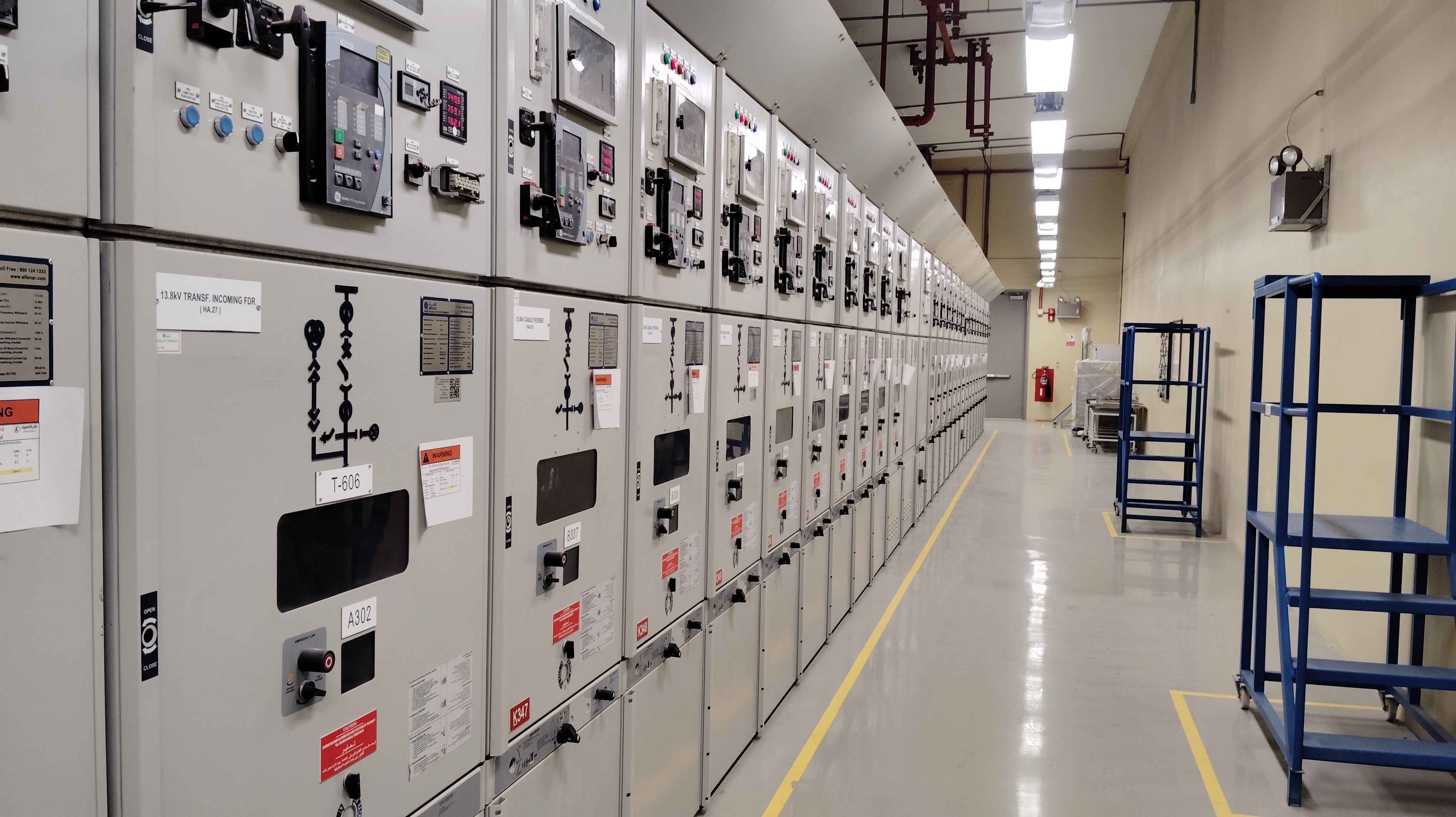




When a business searches for “electrical contractors near me” or “commercial electrical contractors”, the need is usually practical and immediate. A site may need testing, remedial work, fire alarm support, installation upgrades, PAT testing, lighting repairs or a more reliable maintenance partner.
But choosing the right contractor is not just about who can attend quickly.
For offices, schools, hospitality venues, clubs, assisted living settings, industrial units and managed commercial properties, electrical work affects safety, compliance, insurance, downtime and the day-to-day running of the building.
A good commercial electrical contractor should do more than complete the task in front of them. They should help you understand risk, keep records organised, prioritise remedial work and plan maintenance properly.
At Azure Electrical Ltd, our electrical services support businesses with installation, remedial works, statutory compliance and planned maintenance across a range of commercial environments. This guide explains what facilities teams and business owners should check before appointing a contractor, especially when the work involves PAT testing, fire alarm systems, compliance records and ongoing electrical maintenance.
What Should a Commercial Electrical Contractor Provide?
A commercial electrical contractor should be able to support the electrical systems your business relies on every day.
This can include:
Electrical installation
Electrical remedial work
Fault finding
Lighting upgrades
Distribution board work
Compliance testing
Emergency lighting support
PAT testing programmes
Fire alarm electrical support
Planned maintenance
Reactive repairs
Clear reports and documentation
For facilities teams, the goal is not just to get the job completed. The goal is to make the site safer, easier to manage and better prepared for audits, inspections and future upgrades.
Azure’s core service pages include electrical installation, electrical remedial work and statutory compliance.
Why “Local Electrical Contractors” Still Matters for Businesses
Searches for local electrical contractors are popular because location still matters.
A local contractor can be valuable when you need:
Faster response times
Better knowledge of the area
Repeat site visits
Planned maintenance support
Easier communication
Practical help across multiple visits
A contractor who understands your premises over time
For commercial sites, this relationship can become especially useful. A contractor who already knows your access arrangements, plant areas, distribution boards, previous faults and compliance history can often work more efficiently than someone attending the site for the first time.
This is one reason many facilities teams move from one-off callouts to planned service agreements.
Azure’s article on reactive repairs vs planned maintenance explains why relying only on emergency response can become more expensive than planned support.
Commercial vs Industrial Electrical Contractors: What Is the Difference?
The terms are sometimes used together, but they are not always the same.
Commercial electrical contractors usually work in premises such as:
Offices
Schools
Shops
Pubs
Clubs
Hospitality venues
Assisted living buildings
Managed commercial properties
Multi-tenant sites
Industrial electrical contractors are more likely to work in environments such as:
Manufacturing facilities
Warehouses
Production areas
Plant-heavy sites
Larger distribution spaces
More complex machinery environments
Some contractors can support both, but the important thing is to ask whether they understand your type of premises.
A school does not operate like a pub. A club does not operate like an office. A warehouse does not operate like an assisted living site. Access, risk, reporting and disruption planning all change depending on the environment.
Azure supports multiple sectors, including office and corporate sites, education, clubs, pubs and assisted living.
PAT Electrical Testing: What Businesses Need to Know
PAT testing, often called portable appliance testing, is one of the most searched electrical services because many businesses know they need to manage portable electrical equipment but are not always sure what the rules require.
The Health and Safety Executive’s portable appliance testing guidance explains that portable electrical equipment must be maintained to prevent danger. It also makes clear that the law does not specify a fixed PAT testing frequency for every item.
This is important because businesses often assume everything needs annual PAT testing. In reality, the right approach depends on risk.
A proper PAT testing plan should consider:
Type of equipment
How often it is used
Where it is used
Whether it is moved regularly
Previous test results
Visual condition
User checks
Formal visual inspections
Electrical testing where appropriate
For low-risk environments, the HSE explains that not every item requires a portable appliance test. In higher-risk or more demanding environments, more frequent checks may be appropriate.
The key point is that PAT testing should be part of a sensible maintenance plan, not a tick-box exercise.
How Often Should PAT Testing Be Done?
There is no single answer that applies to every business.
The correct frequency depends on the equipment and the environment.
For example, equipment used in a clean office may not need the same frequency of checks as equipment used in a workshop, kitchen, school, hospitality venue or industrial space.
A business should consider:
Is the equipment handheld or stationary?
Is it regularly moved?
Is it used by the public, staff or contractors?
Is it exposed to heat, moisture, dust or impact?
Has it failed before?
Are users trained to spot damage?
Are visual inspections being recorded?
Is the environment low risk or higher risk?
The HSE’s guidance on maintaining portable electrical equipment sets out a risk-based approach using user checks, formal visual inspections and testing where required.
For facilities teams, this means PAT testing should be planned around actual site risk, not simply copied from a generic calendar.
Azure’s statutory compliance service can support businesses that need a clearer approach to electrical testing, records and ongoing compliance planning.
Fire Alarm Services: What Businesses Should Check
Fire alarm services are another major search trend because businesses are expected to understand their fire safety responsibilities.
Under the Regulatory Reform (Fire Safety) Order 2005, where necessary, the responsible person must ensure premises are equipped with appropriate fire-fighting equipment and fire detectors and alarms.
GOV.UK’s workplace fire safety guidance also explains that fire risk assessments should consider fire detection and warning systems.
For businesses, the question is not simply “do we have a fire alarm system?” The better questions are:
Is the fire alarm system suitable for the building?
Is it being tested and maintained?
Are records being kept?
Are false alarms being reviewed?
Have building changes affected the system?
Are detectors, sounders and call points still suitable?
Are faults being closed out properly?
Is emergency lighting being reviewed alongside fire safety systems?
London Fire Brigade’s guidance on automatic fire alarms describes fire alarms as a vital part of a prevention and detection strategy for non-domestic premises.
For electrical contractors, fire alarm work often connects with wider building services, including power supplies, containment, interfaces, emergency lighting, remedial works and compliance records.
Where fire alarm issues identify electrical defects or linked remedial work, Azure’s electrical remedial work and electrical installation services may be relevant.
Commercial Fire Alarm Installation: What to Think About Before Work Starts
A commercial fire alarm installation should not be approached as a simple product purchase.
The system needs to suit the premises, the fire risk assessment, the building layout and how people use the space.
Before installation or upgrade work starts, businesses should consider:
Building size and layout
Escape routes
Occupancy levels
Staff, visitors and vulnerable users
Public-facing areas
Back-of-house spaces
Plant rooms and storage areas
Fire risk assessment findings
Existing alarm equipment
False alarm history
Emergency lighting condition
Electrical supply requirements
Access for maintenance
For pubs, clubs and hospitality venues, the issue can be more complex because spaces may be busy, noisy, dimly lit or used outside standard working hours.
Azure already supports clubs and pubs, where electrical reliability and fire-safety coordination are especially important.
Why BS 7671 Still Matters
For commercial electrical contractors, BS 7671 is a major standard for electrical installation work in the UK.
The IET and BSI published BS 7671:2018+A4:2026 on 15 April 2026. The IET also provides guidance on staying up to date with BS 7671.
Facilities teams do not need to know every technical detail of the Wiring Regulations. However, they should expect their contractor to understand the current standard and apply it correctly where relevant.
This matters for:
New electrical installations
Alterations
Remedial works
Distribution changes
Inspection and testing
Electrical supplies to building services
Documentation and certification
Azure has already covered this in more detail in the article on BS 7671 Amendment 4 and what businesses need to know.
Electrical Contractors Insurance: Why Businesses Should Ask
The screenshots show growing interest around electrical contractors insurance and insurance for electrical contractors. That makes sense, because businesses want reassurance before allowing contractors to work on site.
Before appointing a contractor, ask for evidence of:
Public liability insurance
Employer’s liability insurance
Relevant accreditations
Competence for the work being carried out
Health and safety arrangements
Risk assessment and method statement processes where required
Clear reporting and sign-off procedures
Insurance is not a replacement for competence, but it is an important part of contractor due diligence.
Facilities teams should also check whether the contractor has experience in their type of premises. A technically capable contractor still needs to understand occupied buildings, public-facing areas, access restrictions and site-specific risk.
Azure’s accreditations page provides more information on the standards and recognised schemes that support the way the company works.
Mechanical and Electrical Contractors: When Joined-Up Support Helps
Many commercial electrical issues overlap with mechanical systems.
For example:
Ventilation systems need electrical supplies and controls
Air conditioning units need local isolation and safe electrical connections
Control panels may support fans, pumps or plant
Heating systems may rely on linked controls
Refrigeration equipment needs reliable electrical infrastructure
Fire safety systems may interface with other building services
This is where working with a contractor that understands both electrical and mechanical services can reduce confusion.
Azure provides both electrical services and mechanical services, including ventilation, air conditioning, heating, control panels and refrigeration and cold rooms.
For facilities teams, joined-up support can mean fewer gaps between contractors, clearer reporting and better visibility over how the building is performing.
A Practical Checklist Before Booking Electrical Contractors
Before appointing commercial electrical contractors, ask these 12 questions.
Question | Why It Matters |
|---|---|
Do they work with commercial buildings like yours? | Sector experience affects access, risk and disruption planning |
Can they support both planned and reactive work? | Helps reduce repeat emergency callouts |
Do they provide clear reports? | Supports audits, insurance and compliance records |
Are they aware of current BS 7671 requirements? | Important for electrical installation and remedial works |
Can they support PAT testing on a risk-based basis? | Avoids generic testing schedules |
Can they help with fire alarm electrical support? | Fire systems often link with wider electrical infrastructure |
Do they carry relevant insurance? | Supports contractor due diligence |
Can they work around occupied areas? | Reduces disruption to staff, pupils, customers or residents |
Do they understand mechanical and electrical overlap? | Useful for HVAC, controls and plant issues |
Can they prioritise remedial works? | Helps facilities teams budget and reduce risk |
Do they provide certification where required? | Supports compliance and record keeping |
Can they become a long-term site partner? | Better for planned maintenance and site knowledge |
Common Mistakes Businesses Make When Choosing Electrical Contractors
Many businesses only look at price or availability.
Those matter, but they are not enough.
Common mistakes include:
Choosing the cheapest quote without checking scope
Not asking about insurance or accreditations
Ignoring reporting quality
Not checking BS 7671 awareness
Treating PAT testing as a fixed annual tick-box task
Waiting until a fire alarm fault becomes urgent
Not linking electrical maintenance with wider compliance planning
Using separate contractors with no clear coordination
Failing to close out remedial works after inspections
A good contractor should make the site easier to manage, not leave the facilities team with more uncertainty.
When Should a Business Review Its Electrical Contractor?
It may be time to review your current contractor arrangement if:
Faults keep recurring
Reports are unclear
Remedial works are not being completed
PAT testing is being done without explanation of risk
Fire alarm or emergency lighting issues are not being recorded properly
Your site has changed layout or usage
You are planning upgrades
You need better compliance records
You are relying mainly on emergency callouts
You do not have a clear maintenance plan
Commercial electrical services should support the building over time. If the relationship is purely reactive, it may not be giving your business the control it needs.
How Azure Electrical Ltd Can Help
Azure Electrical Ltd supports businesses with commercial electrical services, statutory compliance, electrical installation, remedial works and planned maintenance.
Our team can help with:
Electrical installation
Electrical remedial work
Compliance-led electrical support
PAT testing planning
Emergency lighting support
Fire alarm electrical coordination
Fault finding
Planned maintenance
Mechanical and electrical support
Clear reporting for facilities teams
Azure works across a range of commercial environments, including offices, schools, pubs, clubs, assisted living settings and managed properties.
To discuss support for your premises, visit the contact page.
Final Thoughts
Choosing commercial electrical contractors should never be treated as a quick admin task.
The right contractor can help your business stay safer, reduce disruption, manage compliance records and plan future works with more confidence.
Whether you are searching for local electrical contractors, PAT electrical testing, fire alarm services or a longer-term maintenance partner, the same principle applies: look for competence, clear reporting, current standards awareness, insurance, sector experience and practical support beyond the first callout.
If your site is relying mainly on reactive repairs, now is a good time to review whether your electrical contractor is helping you manage the building properly.
Need Reliable Commercial Electrical Contractors?
Azure Electrical Ltd supports businesses with electrical services, statutory compliance, remedial works, planned maintenance and mechanical support.