
Most UK schools and businesses need an Electrical Installation Condition Report (EICR) at least every five years. Older buildings, high-risk environments or heavily used sites may need inspections more frequently.
Now let’s explain what that really means and what actually happens when the Azure Electrical team carries out an EICR on a live school or commercial site.
Why EICR Testing Matters More Than Ever
We work across London and the surrounding areas in schools, offices, warehouses and mixed-use buildings every week. One thing we see time and time again is electrical systems being pushed far beyond what they were originally designed for.
In schools, that’s usually:
Charging trolleys and laptops in every classroom
Interactive screens and projectors
Temporary heaters and fans
Kitchens, science labs and DT workshops
Older wiring still serving modern equipment
In commercial buildings, it’s often:
Increased IT and server loads
Fit-outs layered on top of older installations
Equipment added without circuits being reassessed
Years of small changes with little documentation
An EICR isn’t about catching people out. It’s about making sure the electrical system is safe, suitable for its current use and compliant with UK regulations.
How Often Do You Need an EICR?
For Schools
As a general rule, schools, colleges and educational premises should have an EICR at least every five years. In practice, we often recommend shorter intervals for:
Older school buildings
Sites with heavy IT usage
Buildings that have had repeated alterations
Premises with known electrical issues
This isn’t about selling more inspections, it’s about risk. Schools have a duty of care to pupils, staff and visitors and fixed wiring faults are not always visible until they’re tested.
For Businesses
Most commercial premises also fall under a five-year EICR cycle, in line with the Electricity at Work Regulations. Some businesses require more frequent testing, such as:
Industrial sites
Workshops
Food production areas
Buildings open to the public
Insurance providers often expect up-to-date EICRs as well and we regularly see policies queried where testing is overdue.
What Azure Electrical Actually Does During an EICR
There’s a lot of confusion about what an EICR involves, so here’s a clear breakdown from our side.
1. Initial Assessment and Planning
Before we even arrive on site, we:
Review building layouts and usage
Agree access times that work around lessons or business hours
Plan any required shutdowns carefully
For schools, this often means holiday or half-term work or phased testing outside teaching hours.
2. Visual Inspection
Once on site, we start with a thorough visual inspection, checking things like:
Distribution boards and consumer units
Signs of overheating or damage
Cable management and containment
Socket outlets and switches
Earthing and bonding
This stage alone often highlights issues that haven’t been spotted for years.
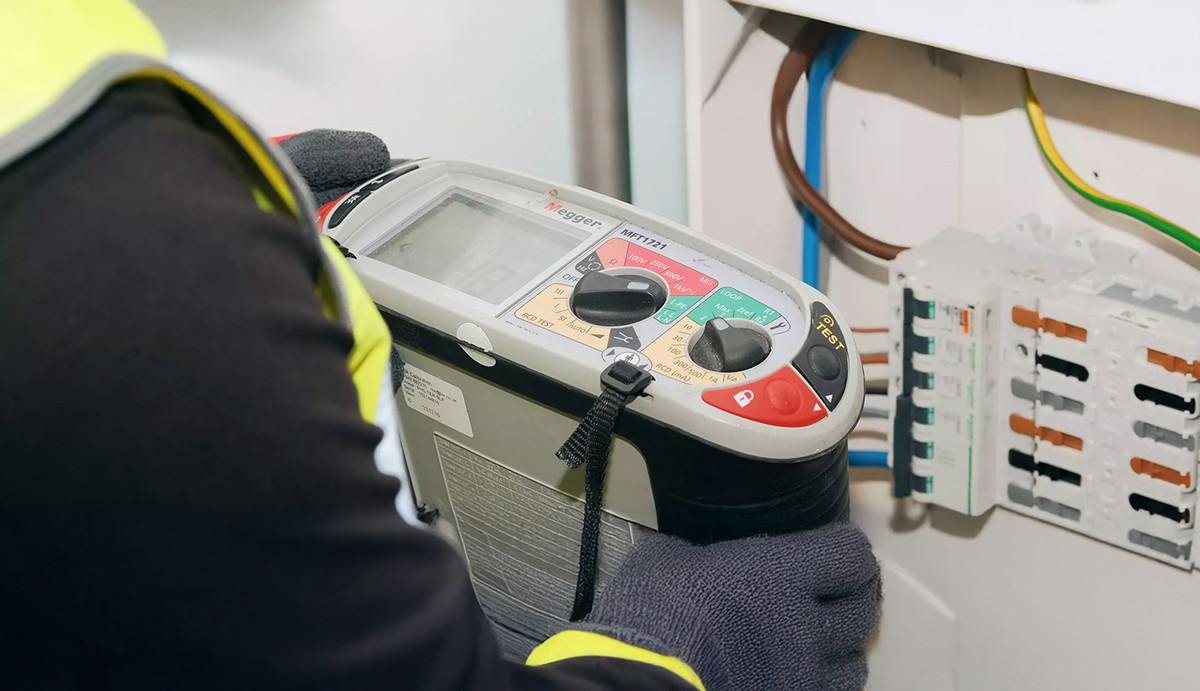
3. Electrical Testing
We then carry out instrument testing on circuits to measure:
Insulation resistance
Continuity
Polarity
Earth fault loop impedance
RCD performance
This is the part that tells us how the system behaves under fault conditions, in other words, whether it will actually protect people if something goes wrong.
4. Circuit Identification and Labelling
In many schools and commercial buildings, circuit schedules are incomplete or inaccurate. We take the time to:
Identify circuits correctly
Update labels
Clarify what feeds what
This makes future maintenance safer and faster, especially for site teams.
Understanding EICR Codes (C1, C2, C3 & FI)
This is often the part clients worry about most, so we explain it clearly.
C1 – Danger Present
Immediate risk. We make safe straight away.C2 – Potentially Dangerous
Urgent remedial work required. Needs fixing promptly.C3 – Improvement Recommended
Not unsafe, but doesn’t meet current standards. Often planned into future works.FI – Further Investigation Required
Something needs closer inspection before we can confirm safety.
We don’t just hand over a report. We talk through it, explain priorities and help you plan sensibly.
Why Acting on EICR Findings Matters
An EICR is only useful if it leads to action.
We regularly see situations where:
Reports are filed away and forgotten
C2 items are left unresolved
Small issues become expensive failures
Addressing problems early usually saves money. More importantly, it reduces the risk of downtime, equipment damage or safety incidents.
When Azure Electrical carries out remedial works, we:
Group jobs to minimise disruption
Schedule around term dates or business hours
Provide clear, fixed pricing
Avoid unnecessary works
A Simple EICR Checklist for Site Managers
If you’re responsible for a school or business building, ask yourself:
Do we know when our last EICR was completed?
Can we easily locate the report?
Were any C1 or C2 items identified?
Has the building changed since the last inspection?
Are insurers or governors likely to ask for documentation soon?
If any of those answers are unclear, it’s usually time for a review.
Why Schools and Businesses Choose Azure Electrical
We understand live environments. Whether it’s a primary school corridor at lunchtime or a busy office during working hours, we plan our work carefully.
Clients choose Azure Electrical because:
We minimise disruption
We communicate clearly with site teams
Our electricians are experienced in schools and commercial buildings
All work is fully certified and documented
We build long-term maintenance relationships, not one-off visits
We don’t believe in scare tactics or unnecessary upgrades. We believe in honest assessments and practical solutions.
Need an EICR or Unsure Where You Stand?
If you’re not sure when your last EICR was carried out or you’ve inherited a building with patchy records, get in touch.
Send us whatever information you have, even if it’s incomplete. We’ll help you:
Confirm what’s required
Plan inspections around your schedule
Stay compliant without stress
Electrical safety doesn’t need to be complicated. With the right approach, it’s simply part of running a safe, well-managed building.