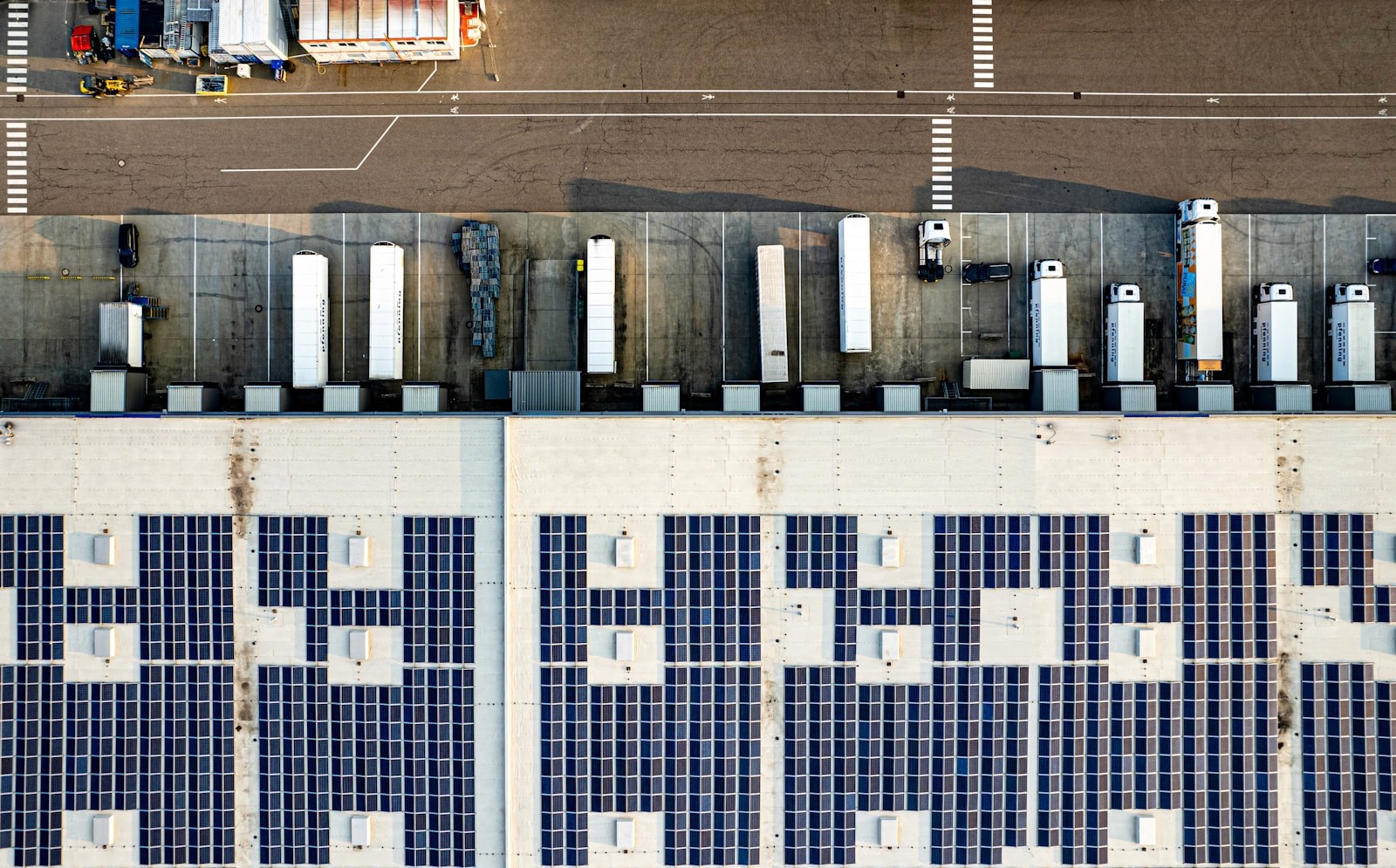





Solar panels can be an attractive investment for commercial buildings looking to reduce energy costs, improve energy performance and plan for a lower-carbon future.
But before a business commits to a solar PV installation, it needs to answer one important question:
Is the building electrically ready?
A commercial solar project is not just a roofing decision. It affects the building’s electrical infrastructure, distribution, metering, grid connection, isolation, controls, maintenance access and future energy strategy.
For landlords, facilities teams and business owners, early electrical checks can help avoid delays, unexpected costs and design changes once the project is already underway.
At Azure Electrical Ltd, our electrical services, electrical installation, statutory compliance and wider mechanical services support commercial clients planning practical building upgrades.
This guide explains the key electrical checks businesses should complete before investing in commercial solar panels.
Why Solar Readiness Matters
Solar PV can support a wider commercial energy strategy, but the building needs to be suitable before installation begins.
A solar PV project may involve:
Connection to the building’s electrical system
Distribution board review
Metering considerations
Export arrangements
DNO notification or application
Cable routes
Isolation points
Fire safety considerations
Roof access coordination
Inverter locations
Future battery storage planning
EV charging coordination
Testing, commissioning and handover records
If these are not considered early, the project can become more complicated.
For example, a business may discover that the distribution equipment needs upgrading, there is limited space for inverter equipment, the cable route is more disruptive than expected, or the proposed system needs a formal grid connection process before it can operate.
The best time to identify those issues is before the business commits to the final design.
Solar Panels and Commercial EPC Improvement
Solar panels often come up when businesses are looking at EPC improvement.
A commercial EPC rates a building’s energy performance from A to G. GOV.UK explains that business premises usually need an EPC when they are built, sold or rented.
Official reference: GOV.UK Energy Performance Certificates for your business premises
Solar PV may help support a building’s energy strategy, but it should not be treated as the only answer to EPC improvement.
For many commercial buildings, solar should be considered alongside:
LED lighting upgrades
Lighting controls
Heating controls
Ventilation performance
Air conditioning efficiency
Electrical capacity
Metering and monitoring
Heat pump readiness
EV charging plans
Building fabric improvements
Azure’s guide on how to improve a commercial EPC rating with electrical upgrades is a useful companion article for businesses looking at the wider picture.
1. Review the Building’s Existing Electrical Infrastructure
The first step is to understand the building’s current electrical setup.
Before planning solar PV, facilities teams should review:
Incoming supply arrangement
Main distribution equipment
Existing distribution boards
Spare capacity
Labelling and documentation
Existing electrical load
Plant and equipment demand
Previous alterations
Space for new equipment
Condition of switchgear
Access for installation and future maintenance
This review helps determine how easily solar generation can be integrated into the building.
If distribution boards are full, poorly labelled, outdated or already supporting heavy loads, remedial work may be needed before solar PV can be connected safely and practically.
Azure’s electrical remedial work service can support businesses where defects, limitations or upgrade requirements are identified during the planning stage.
2. Understand Import, Export and Grid Connection Requirements
A solar PV system generates electricity. Depending on the size of the system and how the building uses energy, some of that electricity may be used on site and some may be exported to the grid.
That means grid connection requirements need to be understood early.
In the UK, small generation systems are commonly handled under engineering recommendations such as G98 or G99, depending on size and connection characteristics.
The Energy Networks Association explains that generation with a capacity greater than 3.68kW per phase falls under EREC G99. Its guidance also points users towards G98 and G99 forms through the ENA Engineering Database.
Official reference: Energy Networks Association: Connecting commercial generation to the electricity networks
For many commercial solar projects, the DNO process can affect timelines. Facilities teams should not assume that panels can simply be installed and connected without checking the required application, notification or approval route.
Before investing, ask:
Who is responsible for the DNO application or notification?
Is the proposed system G98 or G99?
Is export limitation being considered?
Is the site likely to export energy?
Will approval be needed before installation or energisation?
Are timescales realistic?
Has the installer reviewed the local network requirements?
This should be clarified before orders are placed.
3. Check Whether the Distribution System Can Accept Solar Generation
Solar PV changes how electricity flows within the building.
The electrical system must be suitable for the proposed connection arrangement.
Checks may include:
Main switchgear suitability
Distribution board condition
Protective devices
Cable capacity
Earthing arrangements
Labelling
Existing load profiles
Fault levels where relevant
Isolation arrangements
Whether new distribution equipment is needed
A building may have enough roof space for panels but still need electrical works before the system can be connected properly.
That is why solar readiness should include an electrical infrastructure review, not just a roof survey.
4. Plan Inverter Locations Carefully
The inverter is a key part of a solar PV system because it converts DC electricity from the panels into AC electricity that can be used by the building.
Inverter locations need careful planning.
Facilities teams should consider:
Distance from panels
Distance to distribution equipment
Ventilation around inverter equipment
Access for servicing
Noise considerations
Security
Plant room space
Wall strength and mounting
Cable routes
Heat build-up
Fire safety considerations
Future replacement access
A poorly chosen inverter location can make installation harder and maintenance more disruptive.
For commercial buildings, inverter placement should be coordinated with electrical design, fire strategy, building access and maintenance planning.
5. Review Cable Routes Before Installation
Cable routing can be one of the most disruptive parts of a solar PV project if it is not planned early.
A route may need to pass through:
Roof areas
Riser cupboards
Plant rooms
Ceiling voids
Corridors
External walls
Switch rooms
Occupied areas
Tenant spaces
Fire compartments
The route should be practical, protected and maintainable.
Facilities teams should ask:
Where will DC and AC cables run?
Will the route affect occupied areas?
Will ceiling access be required?
Is containment already available?
Are fire-stopping measures affected?
Can the work be completed out of hours if needed?
Will future maintenance access be possible?
For offices, schools, pubs, clubs and assisted living environments, disruption planning is especially important because buildings are often occupied while works take place.
Azure supports office and corporate sites, education settings, pubs, clubs and assisted living environments.
6. Think About Isolation, Labelling and Emergency Access
Solar PV systems need suitable isolation and labelling so they can be operated and maintained safely.
This is especially important because solar PV systems can continue generating when light is available.
A commercial solar readiness review should consider:
DC isolation
AC isolation
Labelling
Main switch room notices
Fire service information where required
Emergency shutdown arrangements where applicable
Access for maintenance engineers
Safe working space
As-installed documentation
Clear labelling and isolation are important for future maintenance, fault finding, emergency response and building handover records.
7. Make Sure the Project Aligns With BS 7671
BS 7671 is a major standard for electrical installation work in the UK.
Azure Electrical Ltd references BS 7671 when carrying out electrical work, alongside other relevant regulations, manufacturer guidance, site requirements and health and safety duties.
Official reference: IET: About BS 7671
Solar PV systems also have specific electrical considerations. The IET’s Code of Practice for Grid-connected Solar Photovoltaic Systems sets out requirements for the design, specification, installation, commissioning, operation and maintenance of grid-connected solar PV systems.
Official reference: IET Code of Practice for Grid-connected Solar Photovoltaic Systems
Azure has also written a dedicated article on BS 7671 Amendment 4 and what businesses need to know.
Facilities teams do not need to understand every technical detail. However, they should appoint competent contractors who understand current electrical standards and provide proper certification, testing and handover information.
8. Consider Roof Access, Fire Safety and Building Coordination
Solar panels are installed on or near the building fabric, so the project needs coordination beyond the electrical design.
Facilities teams may need to consider:
Roof structure
Roof condition
Access routes
Plant already on the roof
Fire safety strategy
Maintenance walkways
Fragile roof materials
Working-at-height arrangements
Existing lightning protection
Drainage and roof penetrations
Warranty or landlord requirements
GOV.UK has published research into the fire safety implications of rooftop photovoltaic panels, including thermal exposure to roofs from fires involving PV panels.
Official reference: GOV.UK Fire safety: solar photovoltaic panels on roofs
For commercial buildings, the key point is that solar PV should be coordinated with the building’s wider safety, maintenance and access arrangements.
9. Check Whether Battery Storage or EV Charging Is Planned Later
Solar readiness should not only look at the system being installed today.
Many businesses considering solar are also thinking about:
Battery storage
EV charging
Heat pumps
Smart controls
LED lighting
Metering and monitoring
Demand management
These future upgrades can affect electrical capacity, distribution design and control strategy.
For example, a site may install solar PV now and EV charging later. If the electrical design does not account for future expansion, the business may need additional upgrades sooner than expected.
Azure’s article on EV charging infrastructure and electrical capacity explains similar principles around supply capacity and future electrical demand.
For heat pump planning, Azure’s guide on commercial heat pump electrical requirements is also relevant.
10. Review Metering and Energy Monitoring
Solar PV is most useful when the business understands how energy is being generated, used and exported.
A commercial site should consider:
Existing metering
Import and export arrangements
Sub-metering
Tenant metering
Energy monitoring dashboards
Half-hourly data where available
Out-of-hours base load
Peak demand patterns
How solar generation matches site usage
A building that uses most of its electricity during daylight hours may be able to use more solar generation on site. A building with different usage patterns may need a more detailed review.
Energy monitoring helps the business understand whether solar PV should be combined with controls, battery storage, load shifting or wider efficiency upgrades.
11. Do Not Ignore Lighting and Controls First
Solar PV can reduce grid electricity use, but it should not be used to cover avoidable waste.
Before investing in solar, businesses should ask whether energy demand can be reduced first.
That may involve:
LED lighting upgrades
Occupancy sensors
Daylight controls
Better heating schedules
Improved air conditioning controls
Ventilation maintenance
Control panel review
Out-of-hours usage checks
Staff energy awareness
Better zoning
Reducing demand first can improve the case for solar because the system can then be sized around a more efficient building.
Azure’s article on LED lighting and EPC ratings explains why lighting is often one of the most practical starting points for energy improvement.
12. Make Sure Records and Handover Documents Are Clear
A commercial solar PV project should leave the building owner or facilities team with clear records.
These may include:
Electrical certificates
System design information
Inverter details
Panel information
Test results
DNO correspondence
Operation and maintenance manuals
Isolation information
Labelling records
As-installed drawings
Maintenance recommendations
Warranty information
Emergency information where relevant
Clear handover records matter because the system will need to be maintained, inspected, understood and possibly altered in future.
Poor documentation can make future maintenance, insurance discussions, landlord reviews and compliance checks more difficult.
Azure’s statutory compliance service can support businesses that need better electrical records, testing and ongoing compliance planning.
Commercial Solar Readiness Checklist
Use this checklist before investing in solar PV for a commercial building.
Question | Why It Matters |
|---|---|
Has the electrical infrastructure been reviewed? | Confirms whether the building is suitable for connection |
Are distribution boards suitable? | Solar may require new ways, protection or board upgrades |
Has the DNO process been checked? | G98 or G99 requirements can affect project timelines |
Are inverter locations practical? | Impacts heat, access, security and maintenance |
Are cable routes planned? | Poor routing can cause disruption and extra cost |
Is isolation and labelling included? | Supports safe operation and maintenance |
Does the design align with BS 7671? | Important for electrical safety and certification |
Has roof access and fire safety been reviewed? | Solar affects more than just electrical systems |
Is battery storage planned later? | Future expansion can affect today’s design |
Is EV charging planned later? | Solar and EV strategy should be coordinated |
Has energy demand been reduced first? | LED and controls may improve the solar business case |
Will handover documents be provided? | Supports future maintenance and compliance |
Common Mistakes Before Commercial Solar Installation
Only Looking at Roof Space
Roof space matters, but it does not confirm electrical suitability. The distribution system, grid connection and cable routes all need checking.
Ignoring DNO Requirements
Grid connection requirements can affect approval timelines and system design. They should be considered early.
Forgetting Future EV Charging or Battery Storage
A solar PV project should not be designed in isolation if the site may later add EV charging, batteries or heat pumps.
Not Reducing Energy Waste First
It often makes sense to improve lighting, controls and operating schedules before sizing a solar PV system.
Accepting Poor Documentation
Handover records are essential for future maintenance, compliance and building management.
When Should a Business Review Solar Readiness?
A commercial building should review solar readiness if:
Energy costs are increasing
The EPC rating needs improvement
The roof is being refurbished
The building is being prepared for sale or letting
A landlord is planning energy upgrades
EV charging is being considered
Battery storage may be added later
Heat pumps are being reviewed
Electrical infrastructure is old or poorly documented
The business wants better energy monitoring
The site has large daytime energy demand
The earlier the review happens, the easier it is to plan a sensible project.
Solar PV, EPC Improvement and Building Services: Plan Together
Solar PV can be valuable, but it should sit within a joined-up building-services strategy.
A commercial energy plan may include:
LED lighting
Lighting controls
Solar PV
Battery storage
EV charging
Heat pumps
Ventilation maintenance
Air conditioning efficiency
Metering and monitoring
Electrical infrastructure upgrades
Control panel improvements
Azure provides both electrical services and mechanical services, including ventilation, air conditioning, heating, control panels and refrigeration and cold rooms.
This joined-up view helps facilities teams avoid making one upgrade that creates a problem for the next.
How Azure Electrical Ltd Can Help
Azure Electrical Ltd supports commercial clients with electrical installation, statutory compliance, remedial work, mechanical services and building-services planning.
For businesses considering solar PV, Azure can help with:
Electrical infrastructure reviews
Distribution board assessments
Cable route planning
Isolation and labelling considerations
Electrical remedial works
Compliance-led electrical testing
Solar readiness planning
EV charging and heat pump readiness discussions
Lighting and controls upgrades
Clear reporting for facilities teams
Azure works with offices, schools, pubs, clubs, assisted living environments and managed commercial properties that need practical electrical and building-services support.
To discuss solar readiness or electrical infrastructure planning for your site, visit the contact page.
Final Thoughts
Solar panels can be a strong investment for commercial buildings, but only when the building is ready for them.
Before committing to a solar PV project, businesses should check electrical capacity, distribution, cable routes, DNO requirements, isolation, inverter locations, fire safety coordination and future plans for EV charging, battery storage or heat pumps.
The strongest projects start with a realistic building review.
If your business is considering commercial solar panels, begin with the electrical infrastructure. It can save time, reduce surprises and help make sure the final installation fits your long-term energy strategy.
Planning Commercial Solar Panels?
Azure Electrical Ltd can support solar readiness reviews, electrical infrastructure checks, distribution assessments, remedial works and wider building-services planning.