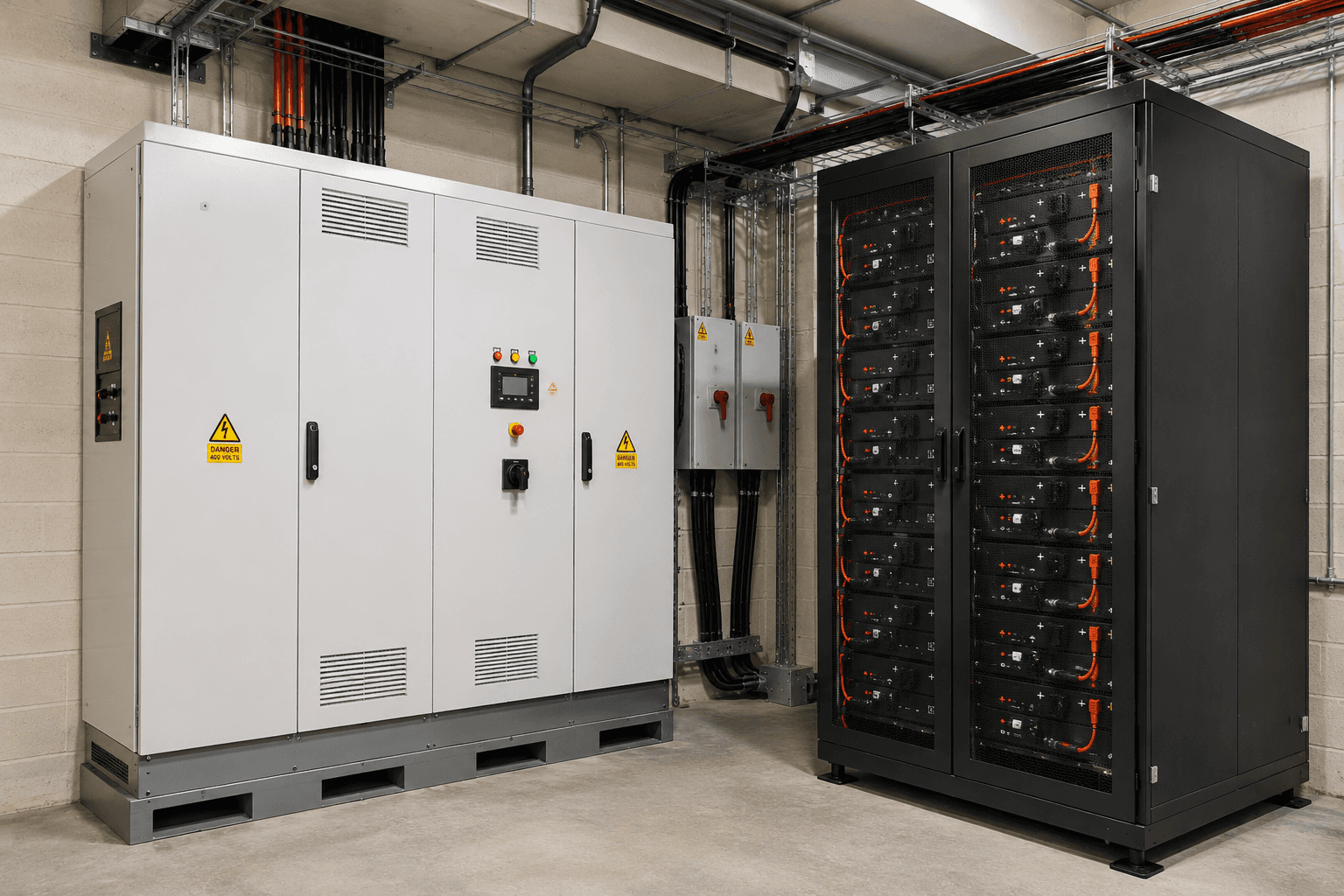





Energy storage is becoming one of the biggest talking points in the commercial electrical sector. As businesses face fluctuating electricity prices, growing demand from EV chargers and pressure to improve energy efficiency, battery storage is moving from a specialist technology into a practical consideration for UK SMEs.
The UK Government’s latest Clean Flexibility Roadmap confirms continued growth in battery deployment, while the latest European Battery Market Outlook forecasts further expansion across residential, commercial and industrial systems.
But commercial battery storage is not automatically suitable for every business. The potential return depends on how your site uses electricity, the condition of your electrical infrastructure and how the battery will be controlled.
This guide explains what SME owners, landlords and facilities teams should consider before investing.
What Is Commercial Battery Storage?
A commercial battery energy storage system stores electricity so it can be used at another time.
Depending on the system and energy strategy, a business may use battery storage to:
Store excess electricity generated by solar panels
Purchase and store electricity during lower-cost periods
Reduce electricity use from the grid during peak periods
Support EV charging demand
Reduce pressure on the building during periods of high electrical use
Provide limited resilience where suitable backup functionality is included
Improve control over how and when energy is consumed
Battery storage should not be treated as a standalone box added to a building. It needs to work with the incoming supply, distribution boards, metering, controls, protective devices and wider energy demands of the site.
Azure Electrical supports commercial clients with electrical installation, infrastructure planning and electrical upgrades before new building demand is introduced.
Why Battery Storage Is Attracting SME Attention
Energy is a significant and sometimes unpredictable overhead for many SMEs. Offices, hospitality venues, workshops, warehouses, schools and multi-site businesses may all experience periods of high electricity demand.
Battery storage can give a business more control over when it draws electricity from the grid. This is particularly relevant for sites that use significant amounts of energy during peak operating hours or already have solar panels producing electricity during the day.
It is also becoming more relevant as businesses add:
EV chargepoints
Heat pumps
Air conditioning
Electric heating
Commercial kitchen equipment
Refrigeration
Automated systems
Extended operating hours
Solar PV
Higher-capacity plant
Battery storage can form part of a broader energy strategy, but it should be planned alongside the building’s other electrical and mechanical requirements.
Azure’s guide to workplace EV charging grants and electrical checks explains why EV charging, solar PV, battery storage and electrical capacity should be considered together.
Could Battery Storage Reduce Your Business Energy Costs?
Commercial battery storage can reduce energy costs in the right circumstances, but savings are not guaranteed.
The strongest opportunities are often found where a business:
Has high daytime or peak-period electricity use
Has solar panels producing surplus electricity
Operates on a tariff with meaningful time-of-use differences
Experiences short periods of very high demand
Plans to add EV charging or electric plant
Has good energy-use data
Can use most of the stored energy effectively
Intends to remain at the property long enough to recover the investment
A battery that is too large may remain underused. A battery that is too small may deliver limited value. The system therefore needs to be sized against real consumption data rather than a general estimate.
Before requesting equipment quotes, review at least 12 months of electricity bills and, where available, half-hourly consumption data. This helps identify when energy is being used, where peaks occur and whether stored electricity could realistically reduce costs.
For businesses beginning with simpler improvements, Azure’s article on reducing business electricity costs outlines practical electrical upgrades commercial sites should consider first.
Solar Panels and Battery Storage
Solar PV and battery storage are often discussed together because a battery can store electricity that would otherwise be exported or unused by the business.
For example, a business may generate more solar electricity during the middle of the day than it needs at that moment. A battery may allow some of that energy to be stored and used later when demand increases.
However, the value depends on:
The size and output of the solar installation
The building’s daytime electricity consumption
Export arrangements
Battery capacity
Charging and discharging limits
Seasonal generation
Energy tariffs
System losses
The planned operating strategy
Battery storage does not correct a poorly designed solar installation, and solar panels do not automatically make battery storage financially worthwhile.
The electrical infrastructure should be reviewed before either system is selected. Azure’s existing guide to solar panel readiness for commercial buildings provides a useful starting point for businesses considering renewable energy investment.
Electrical Checks Before Installing Commercial Battery Storage
The most important step is establishing whether the site is electrically ready.
A commercial battery installation may interact with the main intake, switchgear, distribution boards, generation systems, earthing arrangements, controls and emergency procedures.
A pre-installation assessment should review:
Incoming Electrical Supply
The existing supply arrangement, maximum demand and available capacity need to be understood. Adding battery storage does not remove the need for suitable electrical infrastructure.
Distribution Boards and Switchgear
Boards should be checked for condition, capacity, spare ways, labelling and suitability for the proposed connection.
Where defects or limitations are identified, Azure’s electrical remedial work can support the required upgrades.
Cable Routes and Containment
The distance between the battery, inverter, distribution equipment and metering can significantly affect the scope and cost of a project.
Cable routes may require:
New containment
Fire stopping
External or underground routes
Structural coordination
Mechanical protection
Weatherproof equipment
Access planning
Protection and Isolation
The system needs appropriate protective devices and clearly planned isolation arrangements. These should be accessible, labelled and understood by those responsible for the building.
Earthing and Bonding
Existing earthing arrangements must be reviewed against the proposed design and current electrical requirements.
Metering and Controls
The control strategy determines when the battery charges and discharges. Without suitable metering and control, the business may not receive the expected benefit.
Azure also supports control panels and building controls, allowing electrical infrastructure and energy-consuming systems to be considered as part of a joined-up plan.
Battery Storage and BS 7671 Amendment 4
Battery installations now have increased prominence within the UK Wiring Regulations.
The Institution of Engineering and Technology confirms that BS 7671:2018+A4:2026 introduces a new chapter covering stationary secondary batteries used for the storage and supply of electrical installations.
For commercial clients, the message is clear. Battery storage must be designed as part of the electrical installation, not purchased as an isolated product without proper planning.
Businesses should use competent contractors, maintain clear documentation and ensure relevant installation, testing and certification requirements are addressed.
Azure’s guide to BS 7671 Amendment 4 explains the wider changes affecting commercial buildings.
Where Should a Commercial Battery Be Located?
Battery location should be considered early because it can affect safety, cable routes, ventilation, maintenance access and project cost.
The assessment may need to consider:
Manufacturer requirements
Internal or external installation
Environmental conditions
Temperature
Ventilation
Impact protection
Fire strategy
Escape routes
Access for servicing
Security
Water exposure
Distance from electrical distribution
Future replacement or expansion
The cheapest physical location is not always the most suitable location.
Facilities teams should also involve the relevant fire risk assessor, insurer, landlord and building manager where appropriate. The electrical design needs to sit within the wider safety arrangements for the property.
How to Judge Whether a Battery Storage Quote Offers Value
A commercial battery quote should contain more than the price of the battery.
A professional proposal should explain:
Battery capacity
Usable capacity
Power output
Expected operating strategy
Inverter specification
Electrical connection requirements
Distribution upgrades
Cable routes
Containment
Metering
Control system
Isolation
Protection
Installation labour
Testing and certification
Monitoring
Warranty
Maintenance
Fire and location considerations
Assumptions used to estimate savings
Be cautious of proposals that promise large savings without reviewing the business’s consumption data.
The installer or energy consultant should be able to explain:
When the battery will charge
When it will discharge
What energy costs it is expected to avoid
How the system has been sized
Which assumptions could affect the payback period
A credible proposal should make the limitations as clear as the benefits.
Battery Storage Is Not Always the First Upgrade to Make
Some commercial sites may achieve a better initial return by reducing energy waste before investing in storage.
This might include:
LED lighting
Occupancy controls
Improved time schedules
Heating and cooling controls
Plant maintenance
Distribution upgrades
Energy monitoring
Power factor review where relevant
Removal of unnecessary overnight loads
Improved zoning
Azure’s sustainability approach focuses on practical energy efficiency, modern systems, LED upgrades and smart technologies that support long-term performance.
Reducing unnecessary consumption first can also help ensure any future battery is sized around genuine demand rather than avoidable waste.
Which SMEs Should Consider Battery Storage Now?
It may be worth commissioning an initial assessment where your business:
Already has commercial solar panels
Is planning solar PV
Has high peak-period electricity use
Operates refrigeration, plant or machinery
Is installing workplace EV chargers
Is electrifying a vehicle fleet
Is planning heat pumps or electric heating
Has half-hourly consumption data
Wants greater control over energy costs
Is refurbishing its electrical infrastructure
Is planning a wider sustainability programme
Expects electricity demand to increase
It may be too early to invest where consumption data is limited, the electrical installation is in poor condition, the business may relocate soon or the proposed savings rely on unrealistic assumptions.
How Azure Electrical Can Support Your Project
Azure Electrical supports SMEs, schools, offices, hospitality venues and managed commercial properties across London, Kent and the South East.
Before commercial battery storage is added, our team can assist with:
Electrical capacity reviews
Distribution board assessments
Switchgear reviews
Cable route planning
Electrical installation works
Remedial upgrades
Earthing and bonding considerations
Isolation planning
Metering and controls coordination
Solar and EV infrastructure planning
Testing and certification
Ongoing electrical maintenance
Compliance documentation
Our role is to help ensure the building’s electrical infrastructure is safe, suitable and ready for the additional technology being considered.
To discuss commercial battery storage readiness or a wider energy-related electrical upgrade, visit Contact Azure Electrical.