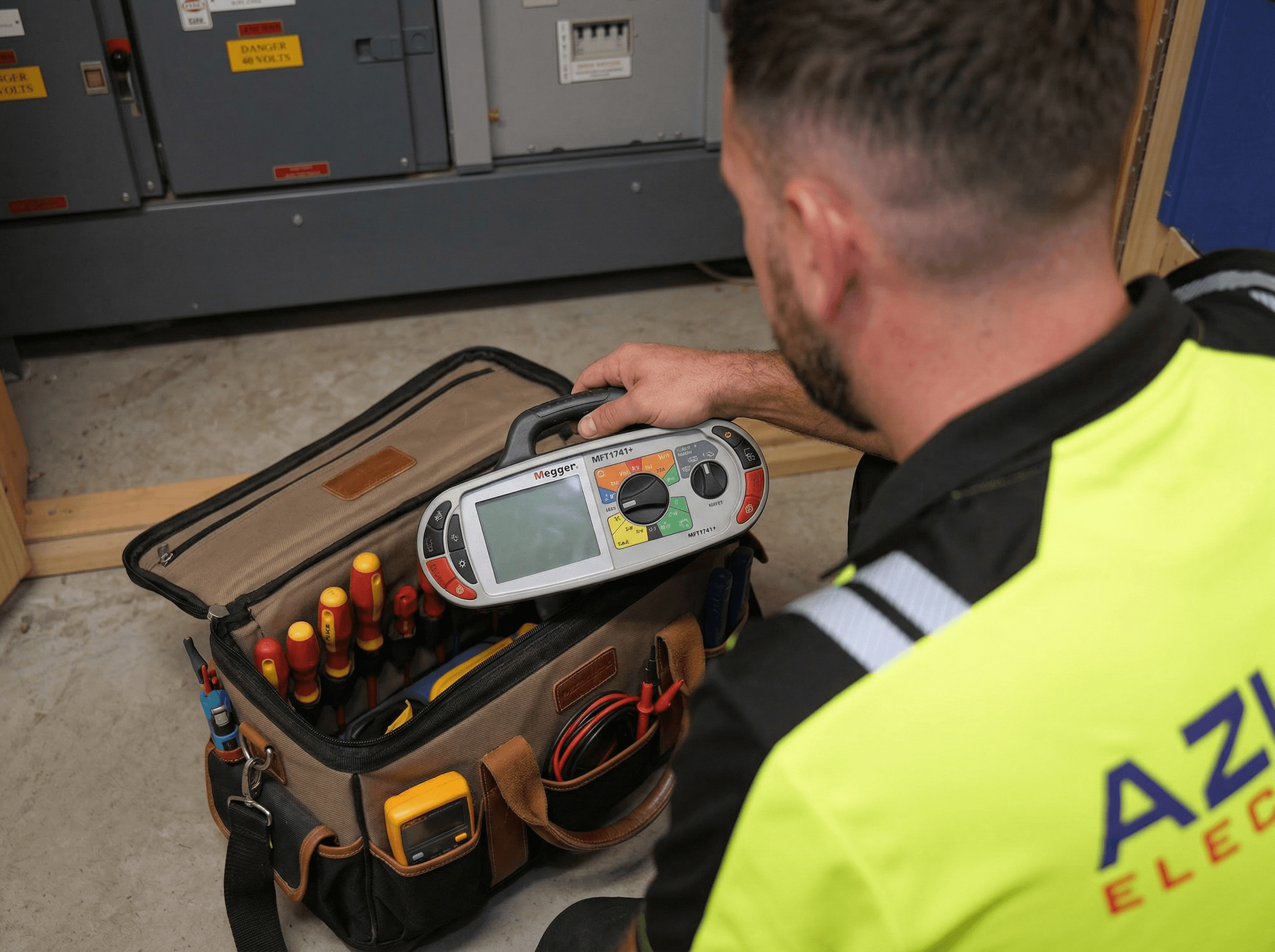




On school sites the difference between a calm follow up and weeks of disruption is usually the plan. This guide lays out a simple way to turn an EICR into a short list of actions with sensible timing and tidy records.
EICR codes at a glance
EICR classification codes show the degree of urgency attached to an inspector’s observations.
C1 — Danger present. Risk of injury. Immediate remedial action is necessary.
C2 — Potentially dangerous. Urgent remedial action is necessary.
C3 — Improvement recommended.
FI — Further investigation is advised. A competent person should establish the cause and scope before the full repair plan is confirmed.
C1 findings need immediate action and C2 findings need urgent action. C3 items can be considered within planned improvement work, while FI items need further investigation before the remedial scope is finalised.
What schools should do next
Confirm that any C1 danger has been made safe.
Prioritise C2 remedial work.
Arrange further investigation for FI items.
Plan appropriate C3 improvements and record the decision.
Retain the EICR, quotations, completion certificates and remedial records together.
Need help planning EICR remedial work? Contact Azure Electrical
If you want the wider testing view in one place see Electrical Statutory Compliance.
Step 1: Read the EICR like a site manager not like an electrician
A report can look technical but the decision making is straightforward. Start by pulling out four things:
Which observations are C1 or C2
Any FI items
Which areas are affected (block floor room type)
Whether any circuits were limited due to access
NICEIC best practice guidance makes it clear that C1 is danger present and needs immediate remedial action and C2 is potentially dangerous and needs urgent remedial action.
Government guidance uses the same definitions and notes that C3 does not require remedial work for the report to be satisfactory.
If you need a plain English refresher for your team this pairs well with the Azure guide Understanding EICR Codes.
Step 2: Triage the work into three buckets
This is the step that stops everything becoming “urgent”.
Bucket A: Make safe now
This is typically anything coded C1. The report may note that hazards were made safe before the inspector left which is also referenced in government guidance.
What this can look like on a school site:
isolating a circuit
removing a damaged accessory from service
making safe exposed live parts
locking off access until repair is complete
Bucket B: Book urgent remedials
This is usually C2 and sometimes FI depending on what is found. C2 is urgent remedial work and FI is further investigation required without delay in both NICEIC and Electrical Safety First best practice guidance.
Bucket C: Build a planned improvement list
This is your C3 list. It is rarely the cause of an immediate incident but it is often where downtime is prevented long term. Government guidance is clear that C3 is an improvement recommendation rather than a requirement for a satisfactory report.
Step 3: Turn “observations” into a work order that makes sense
Most site teams do not need a long technical explanation. They need clarity.
A good remedial plan should list for each item:
exact location
what is being fixed in plain language
access requirements
expected disruption level
the window it should be done in
This is also where you decide whether jobs should be grouped. One isolated socket replacement is easy. Twenty similar faults across one corridor is better as a single planned visit.
Where the EICR points to follow up works the Azure page Electrical Remedial Work is a useful reference for how repairs upgrades and close out certification are normally handled.
Step 4: Choose the right timing for school life
The best remedial work is the work no one notices. In schools that is usually about timing and access.
What tends to work in term time
small repairs in staff rooms offices receptions and plant areas
work that can be completed after school
isolated repairs that do not affect whole blocks
What is usually better in holidays or inset days
distribution board work
works that need longer isolations
grouped upgrades across multiple classrooms
anything that would disrupt teaching routes
When testing or remedials require controlled isolation and safe processes the HSE guidance on electrical work and testing is the backbone. It focuses on safe systems of work and reducing danger during testing and maintenance activities.
Step 5: Do not lose momentum on FI items
FI is one of the most common reasons a report stays open for months. It often means the inspector could not confirm safety without opening up investigating or running additional tests.
NICEIC guidance includes FI as further investigation required and the overall point is simple: until the investigation is done you do not have a complete picture.
A practical way to manage FI:
book a short investigation visit
agree access up front
get a clear outcome note that either clears the item or converts it into a remedial action
Step 6: Keep the records clean so audits are painless
Dutyholders are expected to manage electrical safety through suitable measures and maintenance. HSE guidance on maintaining electrical equipment highlights that the law requires equipment to be maintained to prevent danger and that frequency and type of checks depend on the environment and previous results.
A simple close out pack should include:
the EICR
a summary of actions taken for C1 C2 and FI
certificates for completed works where applicable
retest notes for circuits or boards that were affected
This is especially important for local authority estates teams and multi site trusts where continuity matters.
A simple checklist to finish the job properly
Before you file the EICR away make sure you can answer yes to these:
C1 items have been made safe and recorded
C2 items have a booked date and a clear scope
FI items have a booked investigation visit
C3 items are in a planned list not lost in a PDF
certificates and notes are stored where your team can find them
More support for education sites
For schools trusts local authorities and employers that want a joined up plan for EICRs remedials and ongoing compliance more information is available on Electrical Services for Schools and Education.
If you have an EICR with C1 C2 C3 or FI items and you want a clear remedial schedule with sensible access planning you can request a quote via Contact Us.